
Holidays, Home and the Arrival of Grief

Hello friends. This is a slight shift in content for me, but it connects deeply to what I usually share here. The holidays have begun, and they are, unequivocally, the hardest time of year for me. It’s not consumerism that gets me, but the familiar grief and the themes that the season conjures. This year, with a more attuned lens as a holistic trauma practitioner, I’m noticing things differently. I think I can finally put some of it into words.
Signals
If I’m honest, it started before Thanksgiving. Little pockets of dissociation. A body that protested through back pain, ankle pain, fatigue. A pull toward self-isolation. I chalked it up to being tired and finishing the final project for a credentialing course that ends in December. Dissociation is a protective response from your nervous system. It’s not something we need to make wrong, but we do need to support ourselves.
The holiday tasks began—lists, recipes, logistics—while my system was whispering that something was coming. As an adult, holidays always felt performative. My first marriage demanded Spode plates and gold silverware. My extended family splintered through divorce and distance. Holidays became hollow as the foundation changed. Anxiety settled in as belonging grew more complicated. I think I was always searching for which container I belonged in.
Radar Detector
For six years I’ve worked as a Feng Shui consultant, and I feel energy in every home I enter. Conflict. Residual emotion. Old conversations that hang in the walls. Sometimes I wonder if that attunement is intuitive—or a trauma response shaped by childhood stroke and cerebral palsy. My nervous system always reads the room before I arrive. It braces. It signals through stomach aches, headaches, back pain, sudden heat, preparing for threat. Sometimes holiday “stress” is just our bodies communicating.
The Annual Arrival of Grief
It happens every year: a week or two after Thanksgiving, grief arrives. This past weekend, it came fast and heavy. My now husband loves Christmas (and so do I), so we began decorating earlier than usual. The desert “winter” holiday is its own kind of magic. (I highly recommend 80-degree Novembers) But my stomach hurt. I felt flu-ish. I kept planning, organizing, listing and told myself I was just overtired from a big networking event.
Then the hammer dropped. Shallow breath. Quiet sobs while doing ordinary tasks. Tears over the dust on a storage bin. A too-quick assumption that it must be my HRT. (Why do we so quickly dismiss our own distress? Instead, why don’t we offer ourselves care?) Every holiday song hits like a gut punch. There was panic (unusual for me) and I felt like I was Kung-Fu Fighting in a Santa hat through everything. I couldn’t get a deep breath.
Then…
I can still see him—my father—drifting in and out of lucidity in palliative care. Hallucinating one moment, awake and vital the next. The “surge” they talk about in hospice. He died on December 21, 1995 around 5 in the evening, after a long, brutal walk with metastatic prostate and bone cancer. I was newly out of college and engaged to someone who would later become a source of further trauma.
The call came after dinner. I watched my mother dissolve after years of caregiving. We walked back into the hospital through the sparkling, gently falling New England snow. This is my last memory of our family being “okay.” For the sake of the under 6 members of the extended family, we performed Christmas to try to “make it normal” for them. Services were directly after Christmas. A sibling later fractured away a few years later and all of us carry the unspoken remnants of that time. If I ask which part of me wants to speak to my father, it’s the part longing for acknowledgment. His praise and bright, toothy smile made me feel like a person.
Now….
Every year from late October through mid-January, grief takes shape. It sits at the center of everything. This weekend the pressure in my chest made me lie down for hours. My husband moved through the house quietly laying a blanket on my feet, running errands alone, sitting with me without needing to fix anything. My system was overwhelmed, springing leaks as my nervous system scooted around trying to plug them. During these moments do you ever wish you could blink and then it would be January? My body feels so unaligned and somber.
I knew I’d hit capacity when I dissolved in the car because my husband took too long to choose a direction in a parking lot. We both paid attention, we both knew it was a cue. I am lucky to have a husband who is open to receive and understands how capacity works. He gets curious about how he can support me. (yes, I realize how lucky I am)
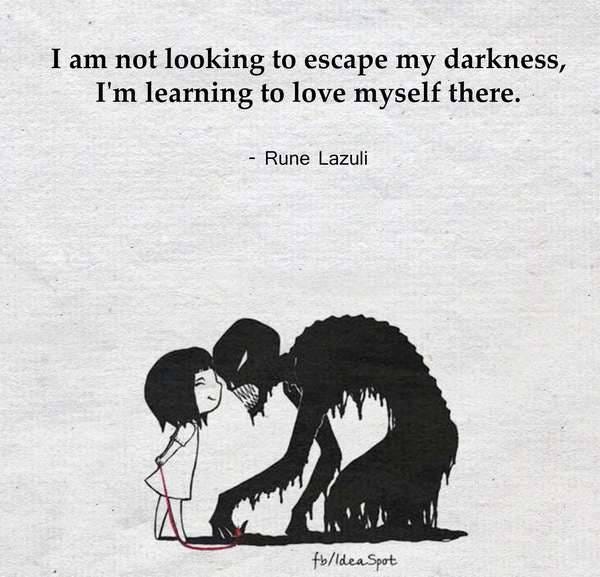
My chest hurt. I got scared. I sat with myself and asked, “What’s happening?” I didn’t get a full answer, but I recognized the grief. It’s not asking to be solved—it wants acknowledgment. I have “regulation activities,” I can breathe, sway, meditate, but regulation isn’t accessible without safety. I was too overwhelmed to find the safety. So instead, with support, I illuminated what was happening.
Full stop: the western world wants to treat what was happening to me—it wants to pathologize it and prescribe. What I wanted was to understand it. We heal in relationship through connection and support and we can create new relative safety.
I asked my husband to put the holiday bins away. It was too much, too fast. The grief that usually ramps up slowly came rushing in. So I paused. Fewer commitments. Less forced music. More space. My grief has the microphone. All the parts and lived experience that have been suppressed want to speak, they want to be acknowledged.
Before…
The truth is the grief began long before my dad’s diagnosis. I can remember being 8 or 10, staring at snowfall from my classroom window, feeling a longing for magic. For shelter. For wonder. For a season where nothing bad could reach me. Trauma whispers that the other shoe is always about to drop. So is my trauma related to my childhood medical trauma? My dad’s death? Could be. Is it related to society’s version of performance? It doesn’t matter. Trauma healing is about noticing and reintroducing patterns and relative experience. That’s why acknowledging our grief is so critical. It’s a voice we need to hear, not to fix it, but to ask what the need underneath it is. It was important for me this weekend to put the brakes on. Honoring my body is far different than the pushing through that was the pattern from past experience. (Sitting with the grief vs. hustling onward and through it)
In another lifetime, I worked with a former NFL star who was a heroin addict. He told me addiction was just the shape of a childhood emptiness he carried everywhere. That even if he hadn’t done pro sports, dated supermodels and made money, that empty space would have been prevalent. It was at the heart of his addiction, an unnamed grief. He still works with it daily. His description of that gray space resonated. Grief doesn’t disappear. It moves beneath our lives like an undercurrent, pulling at our behaviors and nervous-system strategies. Grief is the language of absent acknowledgement trying desperately to create a conversation between our experiences and our bodies. We have to listen (with safety) and not suppress.
Your Home…
I promised to include some design advice. In overwhelm and grief, the best Feng Shui advice is to return to the foundation:
Attend to through-ways: Don’t force your body to constantly navigate around décor.
Mind the lighting: Extra or harsh lighting disrupts circadian rhythm. Is it too Yin? Is it overly Yang?
Choose the important stuff: You don’t need to put “everything holiday” out. Choose a few pieces you love.
Mitigate visual chaos: It triggers fatigue, sensitivity, and autonomic arousal.
Go easy on red: It’s a fire element: it holds energetic chaos when overused.
Seek natural light: Morning and evening light help support your natural rhythm.
Turn the tv off! and Tik Tok, too!: I’m trying really hard to limit my consumption of electronic media in the next few weeks. Extra sensory input can overwhelm your system.
This Is Your Permission to Pause
I can feel the collective holding its breath. Let it out. My husband and I check in with each other regularly, and it helps us feel supported. Be clear about your needs. If you need help, ask. If you’re hungry, eat. If you feel unsafe, reach out. IF YOU FEEL TIRED, REST! Fatigue and grief walk hand in hand. Stay attuned. Also, say no thank you if you need to. People will still love you 😉
Find the softest part of your home and care for yourself there.
Grief travels with us, it has a never-ending bus pass. Pause. Make space. Ask for support.
Shakti Shanti, dear friends.
So eloquently said, thank you for being so emotionally honest and for holding space for others to do the same!! 💜
Thank you Cynthia. This struck the right chord 💕