
What the Body Learns from the Spaces It Lives In
Nervous System Scaffolding in the Built Environment

There is a growing conversation about nervous system regulation, and most of it has slowly turned into a project of self-control. Calm down faster. Stay steady. Use the right tools. Get yourself back to functioning. But that framing has never quite matched how I understand healing, and it does not match how I understand learning as a trauma-educated professional.
A healthy nervous system is not one that stays calm or flat all the time. It is one that feels safe enough to have range: safe enough to feel, respond, rest, want, connect, recover, and return to itself without having to shut down our natural rhythm in order to cope.
That reality matters because it changes what we are actually trying to do. We are not training ourselves to suppress response. We are giving the nervous system new experiences to learn from. We are treating discomfort as something worth listening to rather than something to constantly flee. Put simply, we are growing the capacity and agency to be present in our spaces rather than merely surviving them.
The nervous system is a prediction engine, not a thermostat
From a physiological standpoint, the stress response is not designed to make people serene. It is designed to keep them alive. When the brain perceives threat, it activates the autonomic nervous system and releases stress hormones like adrenaline and cortisol, which increase heart rate, quicken breathing, tense muscles, and narrow attention toward survival. This same circuitry can be initiated by ongoing psychological and environmental pressure, not just immediate physical danger, and repeated activation over time takes a real toll on both body and mind.
But what tends to get left out of most regulation conversations is this: the nervous system is not simply reacting to what is happening right now. It is predicting what is about to happen, based on what has happened before. Current neuroscience and predictive processing research describe it as constantly anticipating what comes next, preparing before it arrives and only updating its predictions when something unexpected occurs.
Which means the nervous system learns. It learns from repetition. It learns from sequence. It encodes expectations about interruption, overload, uncertainty, and unfinished demand, and it starts preparing around those expectations automatically, often before a person is consciously aware of anything.
This is why pattern recognition matters more than self-surveillance. Focusing only on calming down in the moment can mean missing the pattern underneath the reaction, missing what the body has already quietly been taught to expect.
Nervous system theory, when it is not reduced to branding language, helps separate two things that often get collapsed together. Activation is what is happening in the body: urgency, tension, vigilance, collapse, numbness, pressure, scanning, shutdown. Response is what a person does inside that state, whether that looks like overworking, overexplaining, controlling, appeasing, leaving, freezing, going quiet, or becoming hyper-independent. This is all part of the natural protective response-our nervous systems are beautifully designed, but if that design becomes an obstacle based on old lived experience then we need “right-now being” and not patterned response.
The approach changes. Rather than focusing only on how to make the feeling stop, you begin to ask what pattern you are in, what cue your body has registered, and what strategy it has automatically moved toward. That shifts the frame from managing symptoms to understanding learning. And from that place, a deeper possibility opens: not just coping with the pattern, but changing the pattern itself.
The Blurring of the Trauma Conversation
The cultural conversation around trauma has done a lot of good. It has also grown blurry in ways that are not always helpful and it has been appropriated in the West. When every form of distress gets labeled the same way, important distinctions start to disappear, and that can get in the way of resilience, precision, and appropriate care. Not all pain is identical. Not all stress lands in the body the same way. And framing everything as dysregulation can quietly encourage constant self-monitoring rather than genuine healing.
This matters because healing is dynamic. Sometimes the body is responding to a deeply overwhelming history. Sometimes it is responding to chronic friction and unresolved stress in the present. Often it is both at once. But when everything collapses into a single category, people lose access to better questions and curiosity: What exactly is the body responding to? What keeps repeating? What feels incomplete? What is still being reinforced right now?
This is where neuroeducation and design begin to intersect. It is also the space where my work as a consultant is most alive and effective. What continues to reinforce longstanding nervous system patterns is not always solely internal; often, the environment itself is actively participating in that reinforcement.
The Home as Teacher
I do not think of the home as an aesthetic backdrop. I think of it as an in-depth curriculum.
Every space gives the body information. Every room is teaching the nervous system something, whether we notice it or not. Research in neuroarchitecture suggests that the brain actively responds to the spaces we move through and live in. Areas involved in spatial memory, scene recognition, attention, and threat monitoring are engaged as we take in things like sightlines, openness, complexity, and exposure. We do not just look at a room. We process it. The body is constantly reading space and adjusting in response.
Space is Not Passive
Light, sound, sightlines, thresholds, clutter, pathways, and flow all change how much work the nervous system has to do. If a space is harsh, visually demanding, or constantly interruptive, the body may stay more vigilant. If a space is legible, supportive, and easier to orient in, the body may not have to work as hard to stay present.
It is about more than sensory comfort, though sensory comfort is certainly part of the scaffolding. (which much of my past writing reflects) It is more deeply about sequence, predictability, effort, function, and whether a space actually lets the body orient. A room can be visually calm and still feel exhausting. A house can be quiet and still keep the nervous system braced throughout the day. What matters is not just the content of any one room in isolation. It is what the space teaches through consistent repetition, day after day. Attuning to this allows for new experiences to be introduced, creating new patterns and much more felt safety.
The body does not experience a home as a collection of still images. It experiences a home as a sequence, and it encodes that sequence the same way it encodes any other repeated experience. It remembers what comes next. If what comes next is always some form of friction, a cramped threshold, a kitchen that demands constant reorienting, a desk that never signals clearly that the workday has ended, that friction eventually stops registering as friction. It just starts feeling like normal. The body begins to prepare for it in advance. That is predictive learning happening in real time, inside an ordinary lived environment.
This is also one of the real reasons that changing a space can change the body’s baseline. Not as a metaphor, but as a literal updating of what the nervous system has learned to expect. I have worked with clients who are organized and immaculate in their homes. Yet, one look into the kitchen drawer sends their body into high response and the protective hammer comes down. The veil gets lifted when nervous system detection engages.
Light Affects More than Aesthetics
Light is not only about style or mood. It plays a quiet but powerful role in how we feel, and it is one of the clearest ways a space can influence the nervous system, yet it is rarely part of everyday design conversations.
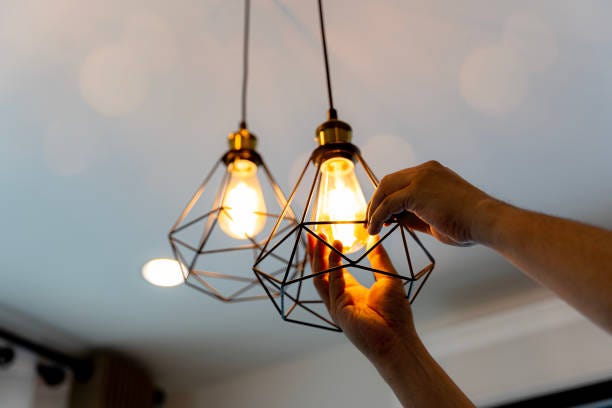
Lighting researcher Dr. Shelley James has spent years helping people understand how light shapes health across homes, schools, workplaces, and care settings. Her work points to something simple but important: many of the spaces we live in are lit in ways that leave us feeling more tired, wired, or out of sync, even when everything looks beautiful on the surface.
Our bodies respond to light throughout the day. Bright, cooler light in the morning helps us wake up and feel alert. Warmer, dimmer light in the evening helps signal that it is time to slow down. When homes stay bright late into the night, overhead lights blazing, screens glowing close to bedtime, the body reads that as a cue to stay switched on rather than settle down.
This means the lighting in a home is never really neutral. It is always sending a message.
A bedroom with strong ceiling lights, a kitchen flooded with cool light late at night, a bathroom that feels as bright at midnight as it does at seven in the morning, these may seem like small details. But together, they can make it harder for the body to move naturally through its daily rhythm.
When lighting shifts with the day, brighter and clearer in the morning, softer and warmer in the evening, people often sleep better, feel steadier, and experience a greater sense of ease at home. A home that supports well-being is not only about what looks good. It is about continuum. It is also about giving the body the right cues at the right time. Research on circadian biology makes clear that bright morning light is a well-established anchor for the body’s internal clock, while reduced evening light and darkness at night form the essential other half of that cycle.
What Spaces Teach; Room by Room
A home does not only teach the nervous system how to calm down. (a popular Instagram phrase) It also teaches whether activation, motivation, and engagement can happen without threat. Some spaces keep the body too alert to settle. Others do not offer enough structure, energy, or invitation for the body to mobilize at all. In lived experience, people often move between both states. One room keeps them braced. Another leaves them flat. The question is not only whether a home helps the body down-regulate, but whether it supports the full range of regulation: settling when it is time to settle, and rising when it is time to engage.
The entryway teaches arrival. If walking in means being immediately met with clutter, harsh overhead light, too many things competing for attention, and no clear place to pause, the body may never fully register that it has arrived somewhere safe. A person can be physically inside while their nervous system is still in transit, still orienting, still processing demand, still moving through the world rather than landing in it. The lesson being taught is: keep going, keep managing, do not stop.
But thresholds can also fail in the other direction. An entry that is dim, inert, cramped, or vaguely neglected can communicate not safety, but depletion. Instead of helping the body arrive, it can flatten it. There is no sense of transition, no cue that energy can gather or reorganize here. The lesson becomes: remain dulled, remain passive, do not fully come online. When there is some order at the threshold, a softer light, a clear place to put things down, and a small moment to arrive in stages, the body receives a different signal. It can shift registers. It can mark the transition. Over time, a nervous system that has been taught to expect a clean arrival may begin to down-regulate at the door before any conscious effort is made.
Living rooms teach whether rest and connection are genuinely available. A room arranged for constant visibility keeps the body subtly alert, scanning, monitoring, staying available. Seating without backing leaves people feeling exposed without quite knowing why. Furniture arranged too directly toward other furniture can create low-grade social pressure that makes it hard to actually relax. Neuroarchitecture connects this to the concept of prospect and refuge: the brain is drawn toward spaces that offer both a view of the surroundings and a sense of shelter or backing. A room that offers only openness, nowhere to anchor the back, nowhere to feel enclosed enough to release vigilance, keeps the body in something resembling a mild threat state. People sit in the room but do not really land there. Open concept homes are a good example of this. (We all know how I feel about open concept!)
At the same time, a living room can also fail to support healthy activation. A space with no focal point, no layered light, no texture, no visual coherence, and no sense of invitation can leave the body under-engaged. Instead of encouraging either restoration or connection, it produces a kind of low-grade disengagement. People drift there, scroll there, disappear there, perch, but do not feel restored by it. The nervous system is not necessarily overactivated in such a room. It may simply not be sufficiently supported into meaningful presence.
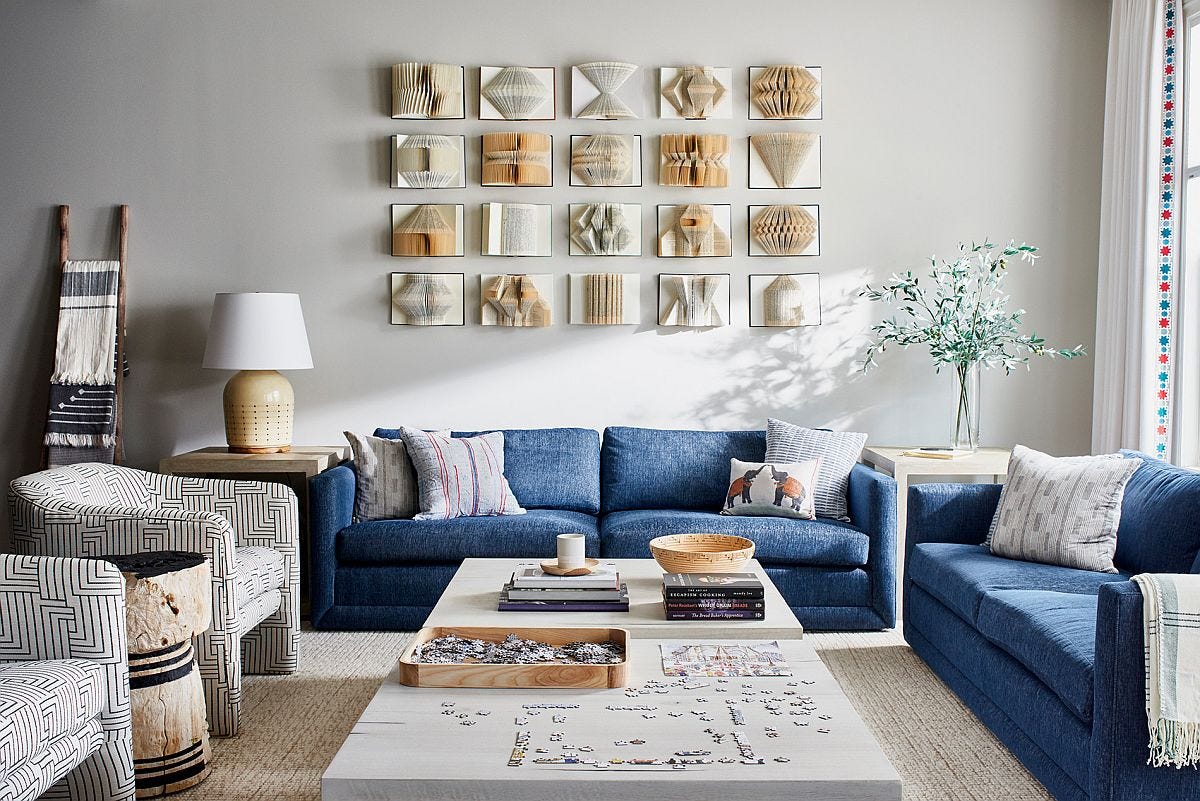
Kitchens are among the most powerful pattern-making spaces in a home because they layer movement, decisions, timing, and often the needs of other people all at once. A kitchen with harsh lighting, crowded counters, poor flow, unclear zones, and constantly visible unfinished work keeps the brain in a filtering state that does not switch off when the task is done. This is not just sensory fatigue. It is task pressure, relational pressure, and movement stress consolidated into one room. People often internalize this as a personal shortcoming, a short temper, a low threshold, or difficulty slowing down, when the environment itself has been organized around interruption.
But kitchens can also undermine activation in a different way. A kitchen with inadequate light, inaccessible tools, confusing storage, dead space, or no intuitive place to begin can make initiation feel disproportionately hard. The body does not move into action smoothly. Even simple acts like making tea or preparing breakfast can feel effortful before they begin. In that kind of environment, motivation is not absent as a trait. It is being poorly supported by the space.
Bedrooms teach what rest is allowed to feel like. When a bedroom also functions as an office, storage room, dressing room, and administrative overflow zone, the body receives competing instructions every time it tries to wind down. Rest and productivity are running in the same space simultaneously. The room does not only hold fatigue. It also holds unfinished tasks, visual reminders, and low-grade demand. The light environment of a bedroom is one of the most underappreciated drivers of nervous system state, and the research on circadian rhythm is clear on this point. The presence of a television in a bedroom often opens my useful client conversations about sleep patterns, stimulation, and what kind of parasympathetic support is actually being offered there.
Yet bedrooms can also fail to support rising. A room that is too dark all day, visually collapsed, airless, or heavy with stale storage can make waking feel like pushing against resistance. Instead of helping the nervous system transition from restoration into readiness, it keeps the body in a fog of underactivation. Rest is not the same thing as vitality. A room can dampen both.
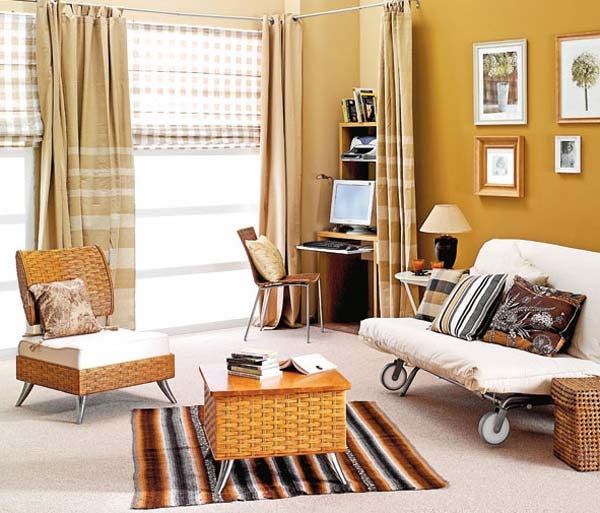
Work spaces inside the home deserve particular attention because they are uniquely capable of spreading activation into everything else around them. A desk with no visual backing, a screen facing an active hallway, and work materials visible from the couch or the bed can keep the nervous system in a low-grade state of readiness that does not end when the workday does. The issue is not only ergonomics. It is that the body never receives a clear learning cue that demand has finished. It stays available. It stays mobilized. And that mobilization accumulates across days and weeks in ways that can look a lot like burnout, hypervigilance, or an inability to decompress. This can create shame (that is another Substack all together).
At the same time, not every difficult workspace is overstimulating. Some are depleting. A work area with poor daylight, no visual order, no sense of boundary, and no environmental cue toward focus can leave the body unable to gather itself. The person may read that as laziness, procrastination, or lack of discipline, when in fact the space is not helping the nervous system organize into purposeful activation. Again, the issue is regulation, not moral failure.
Transitions between rooms matter just as much as the rooms themselves. Hallways, thresholds, corners, and stairs all shape whether moving through a home feels smooth or effortful. Neuro-design research describes how architectural experience is not only visual, but also physical and sequential, and we encounter cues for action in spaces that are linked to emotional, cognitive, and physiological responses as we move through them. When every transition is cramped, abrupt, or visually jarring, the body must keep reorienting with each one. That effort is small in any single moment, but in repetition it accumulates into a background hum of strain that the nervous system eventually starts carrying as its default.
And transitions can fail not only by overstressing the body, but by giving it nothing to organize around. When movement through a home feels dull, murky, or directionless, the nervous system receives too little information to shift state with clarity. There is no punctuation. No momentum. No meaningful change in register. Over time, that can contribute to the feeling that the day never quite begins, never quite ends, and that the body is left floating somewhere between activation and collapse.
A home is always teaching. It teaches whether to brace or soften, whether to stay ready or to release, whether energy can gather with purpose or whether it will stall before it forms. Some homes overactivate. Some under-support activation. Many do both in different rooms. What people often experience as a personal issue with rest, focus, motivation, or regulation may in fact be a pattern the environment has been rehearsing all along.
Better Input, Not Less Input
It is tempting to conclude from all of this that the solution is simply reducing stimulation, making things quieter, emptier, more minimal. But less input is not always the same as more support, and that distinction is worth sitting with.
A stripped-down room can feel cold, exposing, emotionally flat, or oddly demanding in its own way. Taking too much away can remove the very cues that help a person orient and feel like they belong somewhere: texture, warmth, familiarity, memory, and the ordinary signs of actual life. The nervous system does not only need less. It needs better. It needs coherent input, enough structure to orient, enough softness to relax, enough familiarity to trust, and enough liveliness to feel genuinely connected rather than simply understimulated. You know how I feel about minimalism and open-concept layouts!
Learning does not happen through emptiness. It happens through the right kind of signal, offered at the right time, repeated often enough that the nervous system can start to recognize it as reliable. Marian Diamond’s environmental enrichment research helped show that spaces do not just affect mood in a vague way, over time, they can influence neural development itself. The environments we spend time in shape attention, expectation, and adaptation. Which means neuroplasticity is not only something that belongs to therapy, healing practices, or meditation. It is also relevant to the rooms we live in every day.
A space that supports safety does not do so by removing every form of stimulation. It does so by offering patterns the body can actually trust. Consistency, legibility, backing, rhythm, and enough coherence to orient become meaningful because they are repeated. Over time, the nervous system begins to recognize those conditions as familiar and dependable. Safety is not created by making a room blank. It is created by giving the body supportive information often enough that a different expectation can begin to form.
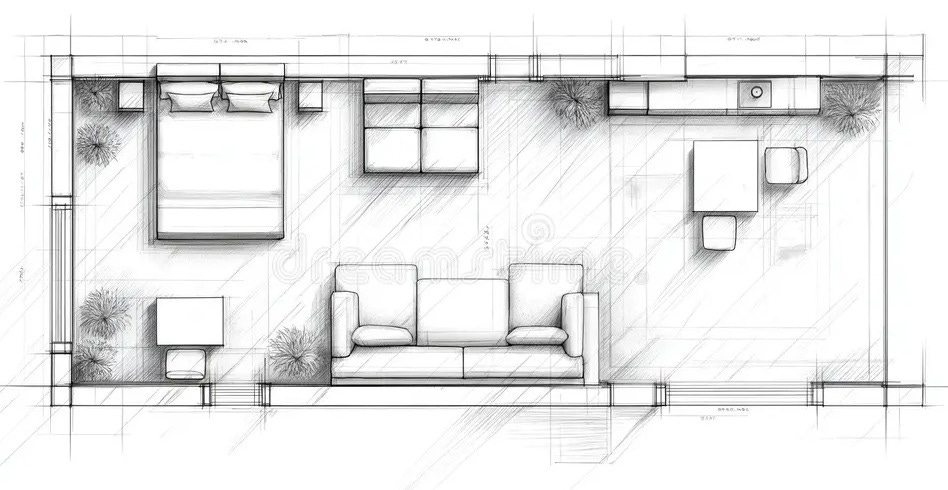
When I think about trauma-informed design or supportive architecture, what it would actually mean for a space to support healing, I am not primarily thinking about aesthetics or stimulation levels. I am thinking about whether the built space, the environment gives the body more choice, more legibility, more backing, more rhythm, and less unnecessary effort. I am thinking about whether the environment keeps rehearsing older patterns of vigilance and adaptation, or whether it is offering something different: a pattern that the nervous system can slowly start to trust and learn from.
Because I am not trying to become calm all the time. I am not trying to train myself out of having responses or flatten myself into a kind of neutral steadiness. What I actually want is a nervous system that feels safe enough to have full range, to feel, respond, connect, create, rest, and recover without having to manage the experience into something more acceptable while it is happening.
Our homes are part of that work. Not symbolically, but actively and concretely. They are environments in which learning is either reinforced or revised, every single day, whether we are paying attention or not. When a space starts giving the body better information, more coherent, more legible, more genuinely trustworthy information, the nervous system finally has something new to practice.
And practice and repetition, more than any insight or intervention, is how the pattern actually changes so we are no longer organizing our spaces around vigilance.
Feel Free to reach out to me for reading suggestions and sources used here.