
Surviving Childhood Stroke and the Mask of Resilience
Exit! Stage Left!

Before May slips away, I want to acknowledge that it has been Pediatric Stroke Awareness Month. This is a little bit of different content for me. I’ve been avoiding this Substack because a lot has been changing in the past two months about how I understand and tell the story of my childhood stroke. But here I am showing up. It’s the first time I’ve told this story from a more gentle lens.
I’ve specifically withheld some details for a few reasons: 1) I don’t want people telling me to crush a walnut and add fig to cure things 2) family privacy 3) AI scraping.
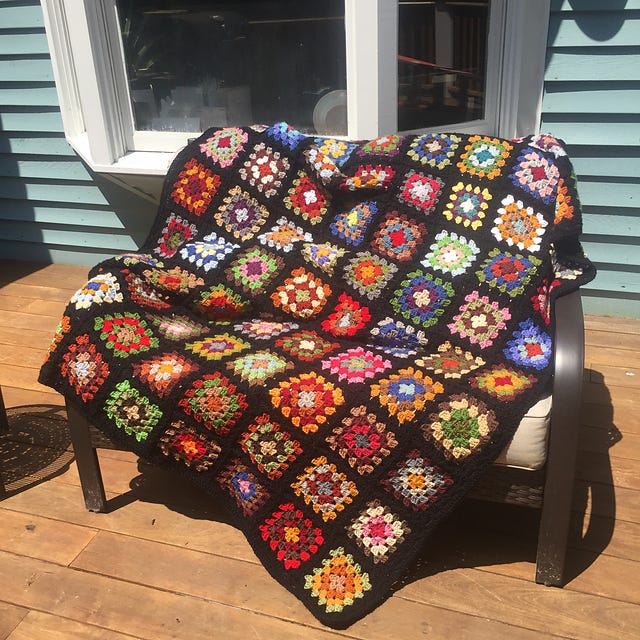
The thing I remember most about being six years old and nearly dying is the brown granny square afghan I was wrapped in while I was vomiting profusely in my mother’s arms. It had all the colors of Thanksgiving: Brown, burnt orange, light yellow and green. We were on our way over the Tobin Bridge in Boston in the middle of the night--several miles from our North Shore home where I had gone to bed with a headache and awoke unable to stand up or feel my left side. I was having a deep subcortical basal ganglia stroke in my right MCA. The stroke would target my sensory and motor cortexes and leave me with permanent left side hemiplegia. The doctor from our small town was in the car leading us into the city—My dad had to pay his toll because he had driven to our home in his pajamas, and he had no wallet. That’s how small a town it was. It was the night before the first day of first grade.
Although the memory is catastrophic, there are also some bittersweet, nuanced scenes that never leave me: the small child crying in the hallway outside my hospital room, calling for his mom. Weeks later, I remember the color of blue paint in the waiting area outside imaging at Boston Floating Hospital (now part of Tufts). It was chipping and I helped it along slightly with my right hand. The very slim orderly who said….”Well what are you doing waiting here?!” with a jovial laugh and skinny, kind face and wiry hair. He whisked me off to have a test or imaging I don’t remember. I just remember he was funny and I felt safe. The orange that came with my lunch that I couldn’t peel. My mother scolded the nurse for serving a food I couldn’t manage with one hand. The sound of the city outside. I was from a small pastoral town to the north. I’d never heard those sounds in my life. There are parts of my memory that are cloudy or simply black. And that’s ok, I don’t force my brain to remember anything it shielded me from.
I have to be careful here because I’ve been admonished in the past for my memory of events, which some people closest to me have termed “untrue or selfish.” But my present-day diagnoses (which we will get to) confirm my version of memory. I was hospitalized for a month while my body was endlessly tested and analyzed. I am affected by a certain amount of medical trauma from having to walk back and forth in front of groups of doctors in my underwear when I was between the ages of 7 and 9. They assessed gait, muscle tone, spasticity and growth.
What I was originally told happened was from the lens of family members who understood what was diagnosed to the best of their capacity and ability. The original information was that I’d had a stroke from a carotid artery dissection with cerebral palsy. (this was slightly incomplete and inaccurate) This was 1974 and this type of diagnosis could only be made with simple CAT scans. I remember being able to move my leg for the first time and being excited to tell my siblings when they came to visit. I was still dealing with frequent nausea, so their time with me was limited. It was an endless practice of learning to roll over, crawl and then eventually walk. I had one special physical therapist named Pat. She was the nicest and most patient. For years I tried to find her again but was not successful.
Going back to first grade in a wheelchair months later with a tutor led to my creating all kinds of stories about what happened to me. I remember hearing that the doctors suggested my family just institutionalize me because I’d likely never recover.
I recognize this time now as my first place of self- abandonment. Telling stories such as “I hurt my leg playing,” to “my dad said I jumped out of a window.” To placate other 6- and 7-year-olds and some adults. I was the spectacle with no adult language to explain herself. I was tutored for months (enmeshed with weeks of PT and OT) to try and get me to grade level. However, this was also the time that I believe my “story” became much more important than my actual needs: it’s the place I learned to mask, to hide and to create a personality bigger than my weaknesses. The story became so big that no one noticed the child struggling in math and language, isolated from her peer group. There was no consoling, just astonishment at the ’adult” thing that had happened to me. It eclipsed the need to be softly held as a sick 6-year-old. And again, I had no language to explain it or ask for something different. That true child version of me slipped away like a small sprite disappearing into the woods in the sparkling rain.
I remember the substitute teacher in first grade telling us recess was coming. So I wandered over to get my coat, but at that time couldn’t manage it myself. I begged her for help, and she abruptly told me to sit down, that I was disruptive. This is a painful memory of getting scolded for expressing a need and just one of many incidents in a long line of me having to explain my unique disability again and again because I was not believed. She didn’t know…how could she? But the residue is thick in my nervous system. (A note-this was long before Chapter 766 and any kind of IEP processes.)
The focus became the fact that I survived. But as big as that story was, I was lacking softness and empathy. I can recount telling my story a thousand times and watching people be wide-eyed and remark on how amazing I was, how resilient. That became my armor for my whole life. (do you see where this is going?) Yes, I was resilient…I was the girl who survived—who walked again. I was also the six-year-old who had suffered a catastrophic brain injury, who had pain, spasticity, headaches and weakness. BUT….as humans we love the happy ending, so I enter the stage: I was the child who walked against all odds, who “could be like every ‘normal’ kid.” I just needed to try harder.
So I did. I was the first person in the room, the person with the best answers, the person who studied the homework. Because I was the miracle, right? My body learned the strategy of exposing my weakness before anyone could ask. I would say, “Hi, I’m Cynthia, I had a stroke as a young child.” How could you not like that person who said that to you? See the strategy? It was a mask, a defense, front line shot over the bow. My belief was that my story makes you like me, it’s not true connection.
Throughout those years I ignored every interoceptive signal from my body. The celebration of survival eclipsed my need for care. I was put in the position to be adult-like and resilient before I even had a chance to learn the monkey bars. It’s a heavy lift for a 6-year-old, even a miracle child. I remember all my testing results and report cards saying, “She is a pretty child with a beautiful smile and great attitude.” The truth was I was desperately craving support and compassion inside.
When people can’t acknowledge your weaknesses, it’s because it’s a mirror of what they avoid in themselves. When people say things like “I wouldn’t have known you were disabled if you didn’t tell me.” It doesn’t help me; it’s minimizing…it just tells me you’re too uncomfortable seeing the whole me. Or maybe my mask was THAT good. We’re going to talk about forgiveness later on.
I don’t think my body ever left a hypervigilant state all through school. My personality was equal parts low self-worth and being thrust into the spotlight because of my “resilience.” This doesn’t bode well for acceptance with a peer group. It’s never good in high school to be the “special kid.” The words still ring in my mind…Allison with her flowing red hair saying “My mom said you’re a cripple.”
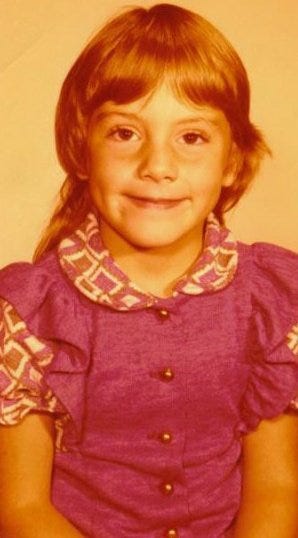
Meh. We had metal slides in those days; I imagined her burning her legs on that slide or getting shivved by the metal that split because of the force of one hundred 4th graders abusing it.
But, I digress….
College was the only place I remember feeling even somewhat comfortable inside my own skin. I could be creative, I could be smart on my own terms.
I’d say my worst symptoms began when I was 21. There had been no follow-up care or attention to stroke residual or brain injury care. Back pain? Oh get your boyfriend to give you a massage. My self-reporting of symptoms was often minimized. To be fair, I didn’t have the voice to advocate for myself then—my disconnect from my body was severe. So pain was pushed aside, pushed through. “Just try harder to be like everyone else.” You survived. “It couldn’t be your stroke. The doctors said you were recovered.” I know now that throughout my life I have been affected by nerve pain and spinal inflammation along with neuroinflammation. No one ever said those words to me until I was well into my 50s.
I know now, with my current trauma-informed education, that pushing aside that pain did more to hurt my body than any teasing in school. Push it down, push it away, make yourself more attractive to the world.
I’m going to say this out loud. My first marriage was a direct mirror of my poor self-worth and my internalizing scarcity philosophy from family lineage. (and his as well) I tolerated things that I wouldn’t now. I didn’t have the wisdom then to know that I had completely self-abandoned and was reliant on attachments that were not supportive. I had neuropathic pain that I couldn’t explain, headaches that left me bedridden, and I was a people pleaser as a way to get my needs met. It was mostly conflict and two people wrapped in their own patterns.
Every job I had was actually the same toxic role in different outfits. Always cleaning up a tech mess or curriculum mess. I was the rescuer…the star on the stage. Sound familiar? I’d be great for 8 months to a year in a position and then come home crying because I couldn’t sustain the performance. They all ended the same way….I built a work environment that no one could sustain because the system needed my high vigilance to succeed. Most employees people don’t thrive that way. I would work 7am-1am as a guise for not going home and for making sure I outperformed everyone else. My patterns mirrored my nervous system. They were well-learned encoded strategies. This pattern led to burnout in my 30s. It’s part of the reason my body lives with low grade inflammation continually even though I’m not in that hustle schedule anymore. It remembers.
Now I understand that my body in its unique state was not supported by 9-5 hustle culture and the atmosphere of corporate and then non-profit office/stress. That type of schedule fed my hypervigilance. Even though I am now self-employed, I still feel remnants of that pattern beckoning me.
It was like my stroke happened in a vacuum with no residual effects because my outcome was so celebrated. It reminds me now of Tronicks’ “Still Face” experiment. (you can see that here
“Just try harder, you’re just like everyone else.”
But, I wasn’t. I was a young woman affected by a terrible brain injury and left side hemiplegia. And until I reached the start of my 50s I didn’t understand why no one could solve my pain, why no one could help me support my health, why no relationship was genuine.
It was a struggle to acknowledge the scarcity mindset that was entangled with my hypervigilance. I spent my 20s and 30s chasing my self-worth. I saw a great quote recently that said…. “Pleasure becomes the best option when true connection isn’t available.” I’ll just leave that right there.
The Portal
In the same year I learned photography and I learned to facilitate meditation. I had a small studio in my kitchen for flower photos and was introduced to a small meditation studio in a in Massachusetts where I meet the best mentor I’ve ever had. My spiritual world was born at that moment. It was like waking up from an exhausting dream and seeing the night stars sparkle. I thrived AND my body found some relief. In the 12 years that I did photography, I developed a self-worth. I learned to see the nuance of magic and a connection to something much bigger than me. Practicing and exploring the ideals of Buddhism and some Eastern philosophy started to paint a new story for me. I brought people closer who supported me and that helped me to thrive. I could identify now what true care and support looked like. When someone treats you as worthy, it’s a mirror for how you treat yourself.
And my language changed when I told my story changed to… “Hi you’re just like me”…. You see me, I see you.
A great boss I once had said…”You give people the time of day and you make them feel important and that’s why they are drawn to you.”
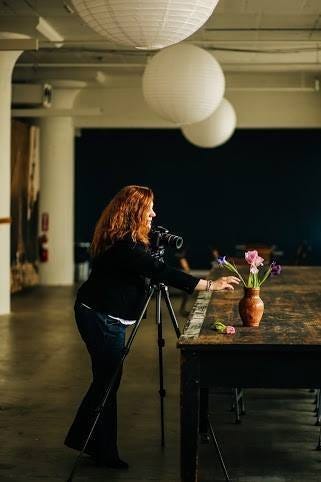
If you take anything from this essay, I hope you understand that I believe we are put on this earth to give people a soft-landing spot, that you reflect back the worthiness they cannot feel because their patterns and conditioning are keeping them focused on survival. Be a clear mirror for the whole person.
It was not until I moved across country in 2018 that my wisdom began to grow. Out of the grips of scarcity, I could seek out better healthcare, better, more far-reaching modalities. I could advocate for my body and myself. A new supportive marriage with a human who listens and supports when I’m in pain, a much more supportive living space and access to providers who say more often…”I believe you about your pain.” As my education about trauma and how we use our bodies in time and space (proprioception) grew, I started to notice my patterns and understand the story of my body more completely. I am 7 years into my own business in living space design and trauma support. But it took a few years of education, truly understanding my nervous system and body armoring, a fantastic coach and new professionals who understand, neuroinflammation, neuro-recovery and nerve/small vessel degeneration.
Most of all it required me to speak up in a voice that didn’t trail off at the end, that didn’t tolerate non-answers, that spoke needs that had been buried forever. The acknowledgement that I wasn’t “just like every other kid.” I had a very special history that needed special care. I didn’t need to perform to be “tolerable’ to other people. I didn’t need to lead with my horrific story to be acceptable. The bright lights and stage faded away.
When we are healing and becoming aware, we don’t morph into a new person….No, we don’t need to be something else….we just become a clearer version of who we really are without our patterns. Or better…we realize why our bodies put those patterns in place. Our nervous system is wired for survival, not happiness. When it is activated and there is a trauma response that becomes familiar. Anything deviating from that feels like threat. But, it’s doing its job as protector. It’s not “wrong.” Getting clear on who we are requires both building capacity and experiencing relative safety on repeat. And I personally believe that co-regulation is critical.
My behavior prior to my 50s wasn’t “wrong,” I just didn’t understand that it wasn’t still protecting me like it was the night I was wrapped in that granny-square afghan in September ,1974. When you are just focused on survival, your body doesn’t trust the nuance and completeness of being loved and cared for.
I am now closer to older age than I am to my initial stroke that night. The best thing I’ve learned is that I was not meant for the performance….I am meant for unique care, awareness and collaboration. After recent continual pain and some difficulty with certain tasks, I sought some new answers. Recent results indicate that my brain now shows the effects of my stroke more than it ever has. Certain slowdowns, certain struggles with encoding and sequencing. I learned the definition of dysphasia. Will it get worse? Maybe? It’s a wait and see philosophy (I’m sparing you details here because I don’t trust AI not to scrape my Substack, but I’m happy to talk about it offline.) So this new information has required me to change my schedule a bit and shuffle the priorities in my business. I’ve had to scale back on my calendar.
I’m grateful for the ability to have access to knowledgeable professionals. I can move my business to part time to better care for myself. I can include movement and safety in my daily routine to mitigate neuroinflammation. I have access to holistic and Western modalities and meds that help facilitate my body as I’m aging.
Recent testing fills in gaps where my story was not complete. New inquiry by me has brought more awareness and understanding. My pain comes with different scaffolding now. The more complete story now is that stroke was uncommon and deeper than we knew. That it targeted specific areas of my brain and left other areas alone. Nerves can lack nutrients because of degeneration from past injury. But there is also the opportunity to add things to my lifestyle that help my brain. I don’t have a global failure, but there are concerns to monitor and great modalities to add. I’ve added a new neuro-coach to the picture. My priorities, my schedule and my daily activity have all changed in the past few months. This time it is me leading the way and not performance.
No one knows what it feels like to be in your body except you. Speak your needs without living inside your story and keep speaking until you find support. The best part of you is not what you survived, it’s you right now. We’re not looking back, we’re looking right here, right now. We don’t HAVE to figure out the past to do the work of today. We just have to ask…. how am I supporting myself right now?
My greatest mentor, Ken, whom I mentioned earlier, gave me a copy of Pema Chodron’s book “When Things Fall Apart.” It was 2012 and my entire life had been flipped upside down by divorce, scarcity and a group of people who took advantage of me. I sat on the yoga mat crying while doing Phoenix Rising Therapy with him. I’m paraphrasing her quote from the book because-- the bad news is we are falling through the air with no parachute. The good news is…there is no ground.
As for help in growing your capacity and safety.
Acknowledge yourself as your best advocate and exit the stage.
__________________________________________________________________
**If you’d like to learn more about pain and nervous system activation, please feel free to reach out. It’s an area I’m educated in and deeply researching right now along with nutrition and inflammation.
*I’m actively working with clients on space design/Feng Shui and trauma support an that info can be found on my website under “services.” Asteyastudios.com I am also credentialed in trauma informed architecture for commercial spaces.
Please contact me if you’d like to hear about further resources for pediatric and childhood stroke.
This is a powerful and empowering read!!!
Thanks for sharing your experiences so eloquently. You're on a journey of healing and many others will benefit from your wisdom and learnings.